Case Study
Transforming a Manual Cell Therapy Workflow Into an Embedded Automated System (0→1)
Thank you for your interest in my experience as UX lead for the DynaCellect Magnetic Separation System.
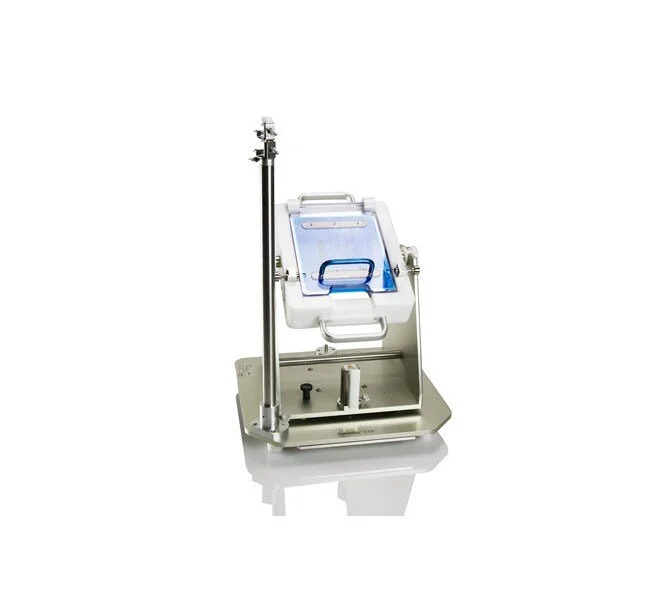
DynaMag manual predecessor
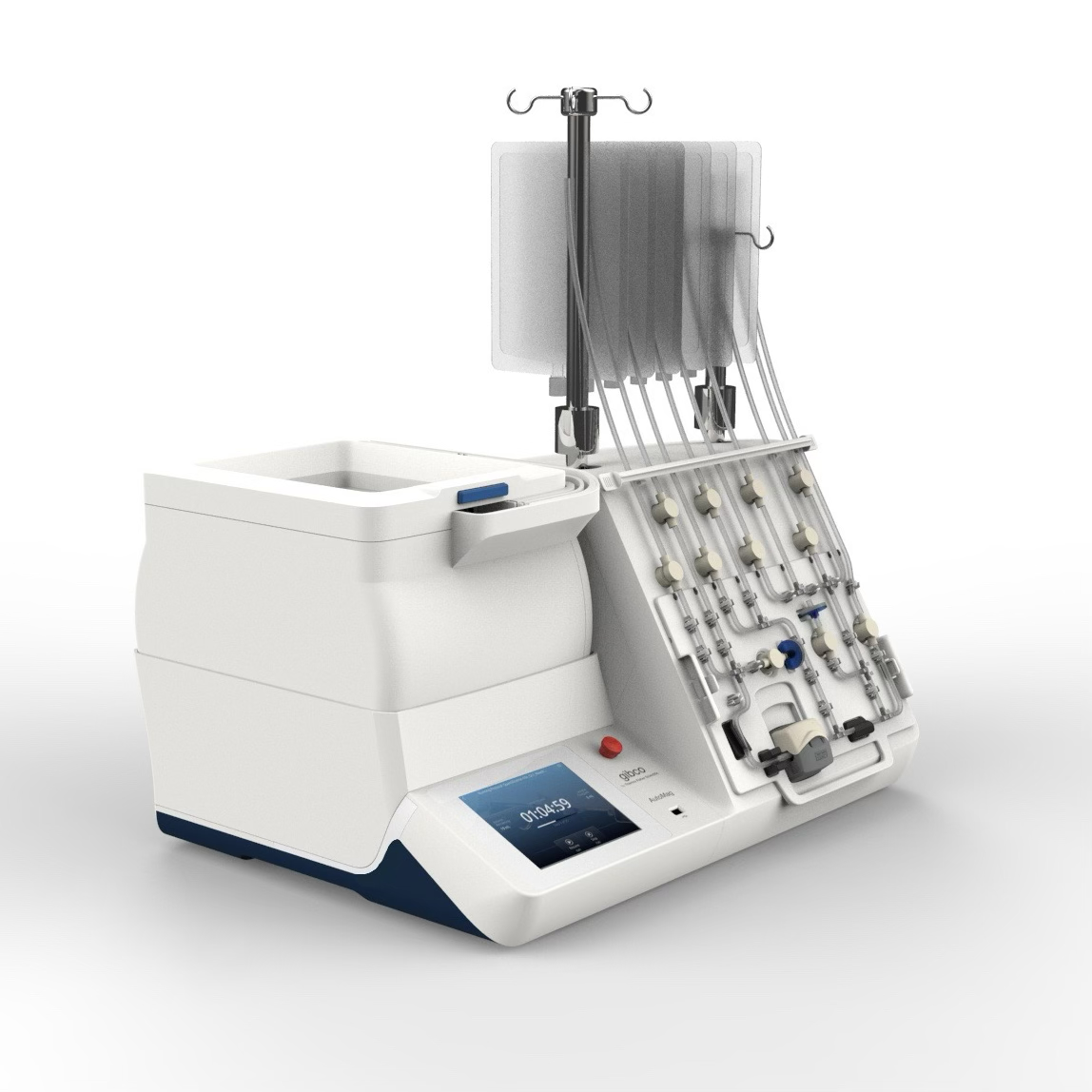
DynaCellect automated system
Scientific Context
DynaMag and DynaCellect are magnetic separation instruments used to isolate, wash, and concentrate T‑cells during cell therapy manufacturing*. These devices are part of a multi-instrument workflow.
DynaCellect automates the bolded steps below:
Magnetized Dynabeads attach to T‑cells, enabling magnetic isolation
A magnet attracts the T‑cells attached to the beads, separating them from other cells
The isolated T‑cells are then expanded and during expansion the beads naturally release
A second magnetic separation collects the released beads, leaving purified T‑cells in a liquid suspension
Purified T‑cells are washed and concentrated
Expanded, purified T‑cells are tested and frozen for return to the patient
*Cell therapy introduces healthy, living cells into the human body to repair, replace, or regulate damaged cells. These can be the patient’s own cells or those from a donor.
How I Contributed
My role was to translate a manual cell therapy workflow for T‑cell isolation into an intuitive and auditable digital experience, flexible enough to support both investigative process development and regulated clinical manufacturing.
This work took place across a highly distributed global team spanning Singapore, Norway, India, and the East and West coasts of the United States, beginning before and continuing through the global Covid 19 pandemic.
Where do you even begin with a program like this? Learning and connecting, two of my favorite things!
Built strong, respectful relationships and kept everyone connected
Relationships and connection are important to me! With a globally distributed, multi‑disciplinary team, making sure everyone felt seen, heard, and respected was a top priority. That foundation of trust made it possible for us to communicate openly, find alignment, and solve problems together across our respective locations. When the pandemic began, proactive communication became even more important for maintaining momentum and supporting one another through such an unprecedented time in our lives.
There were challenging moments, as there always are, but thoughtful communication and respectful conversation helped us move through them with success.
Immersed myself in the science and workflows keeping end users and patients front of mind
With curiosity and genuine interest, I spent time in the lab watching scientists run the manual instrument, asked endless questions, facilitated group working sessions, and contributed to research activities. I immersed myself in the science, the up and downstream processes, the requirements, and the known constraints until I could design with accuracy, empathy, and scientific literacy.
There were definitely moments when my brain felt full and the concepts felt like learning a new language, but with care and persistence, reading, observing, and asking thoughtful questions it became clear!
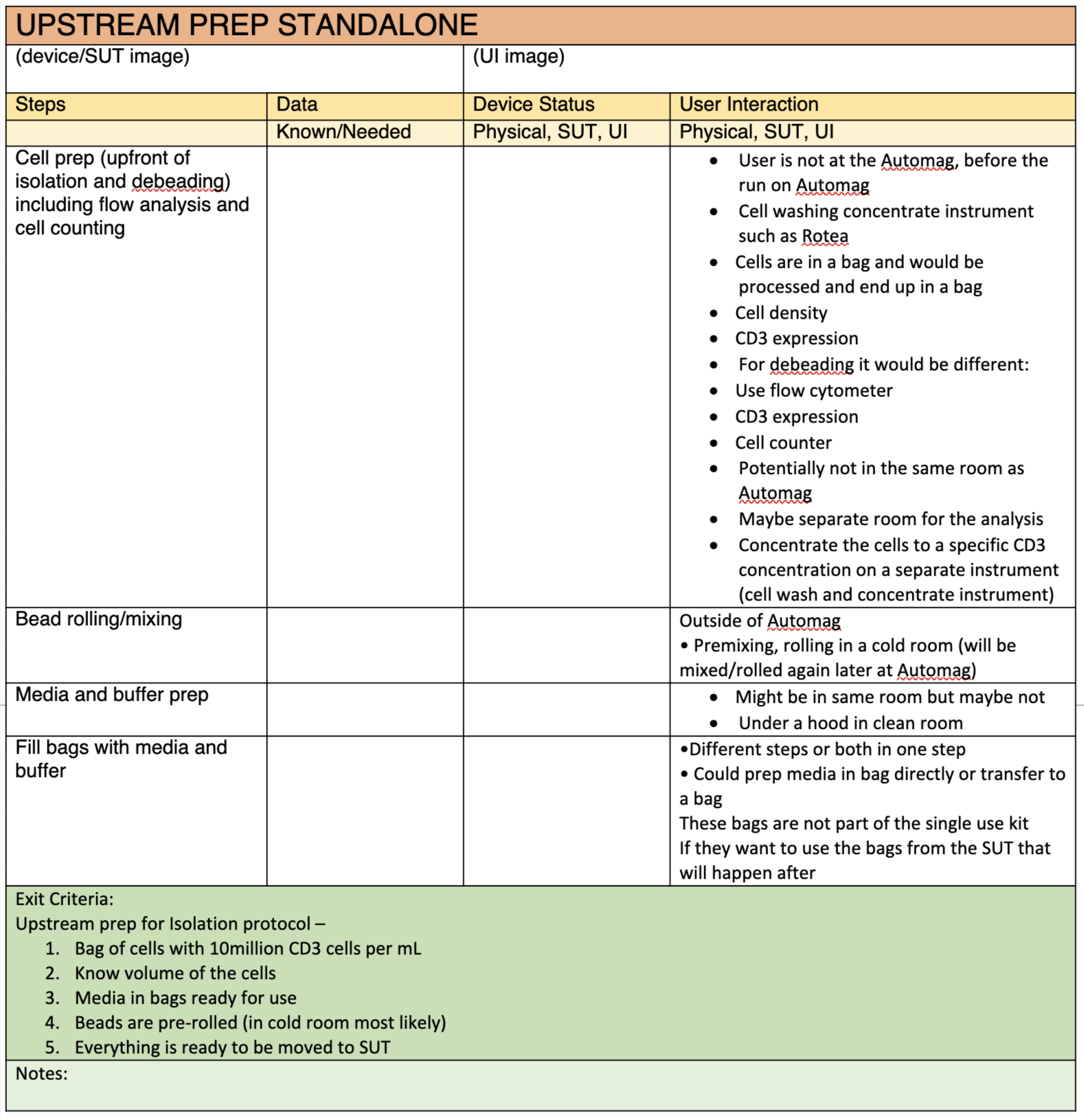
This is a document I created and referred to as an activity matrix. I needed a way to capture and walk through every activity and touchpoint of the workflow, considering both physical and digital, including up and downstream processes. I used this as an early guide as I facilitated knowledge transfer from our scientists. This example is in draft, raw notes form.
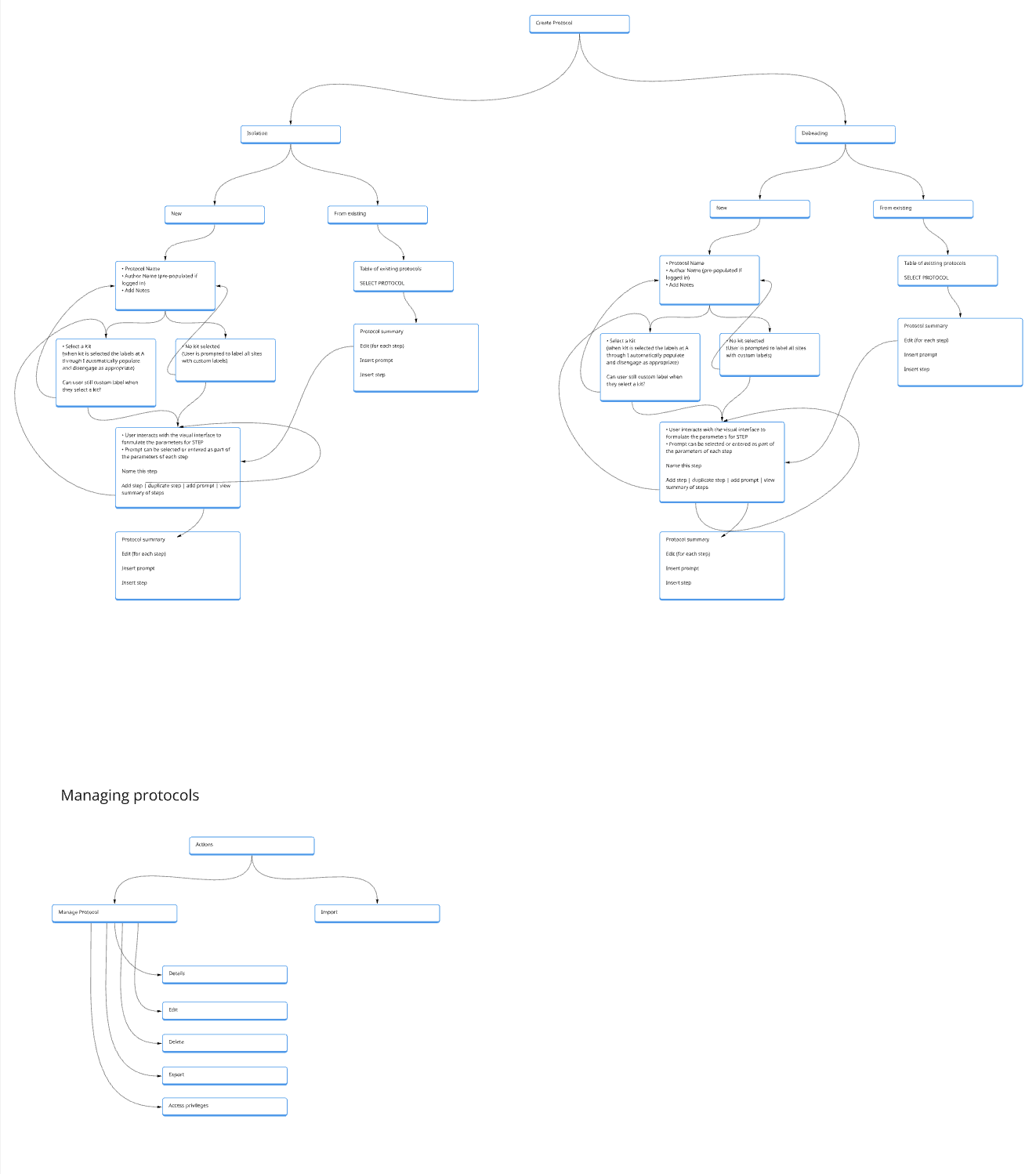
These are the 2 primary workflows and the admin flow in their simplest forms.
Interpreted the manual workflow into a guided, stepwise digital experience
Every scientific variable, user need, instrument state, and consumable interaction was considered to define the digital approach, workflow stages, content, and steps.
Because this was an embedded UI, the design needed to stay aligned with what the instrument and consumables were doing at each step, support gloved hands, consider optional tools such as inline bead calculators, and guide actions that needed more careful attention. Near launch, I also consulted on the desktop protocol builder to ensure continuity with the embedded UI.
For this program I owned the UX, writing, and portions of the UI / visual design, partnering closely with a UI / visual designer who was implementing this new brand language for the first time.
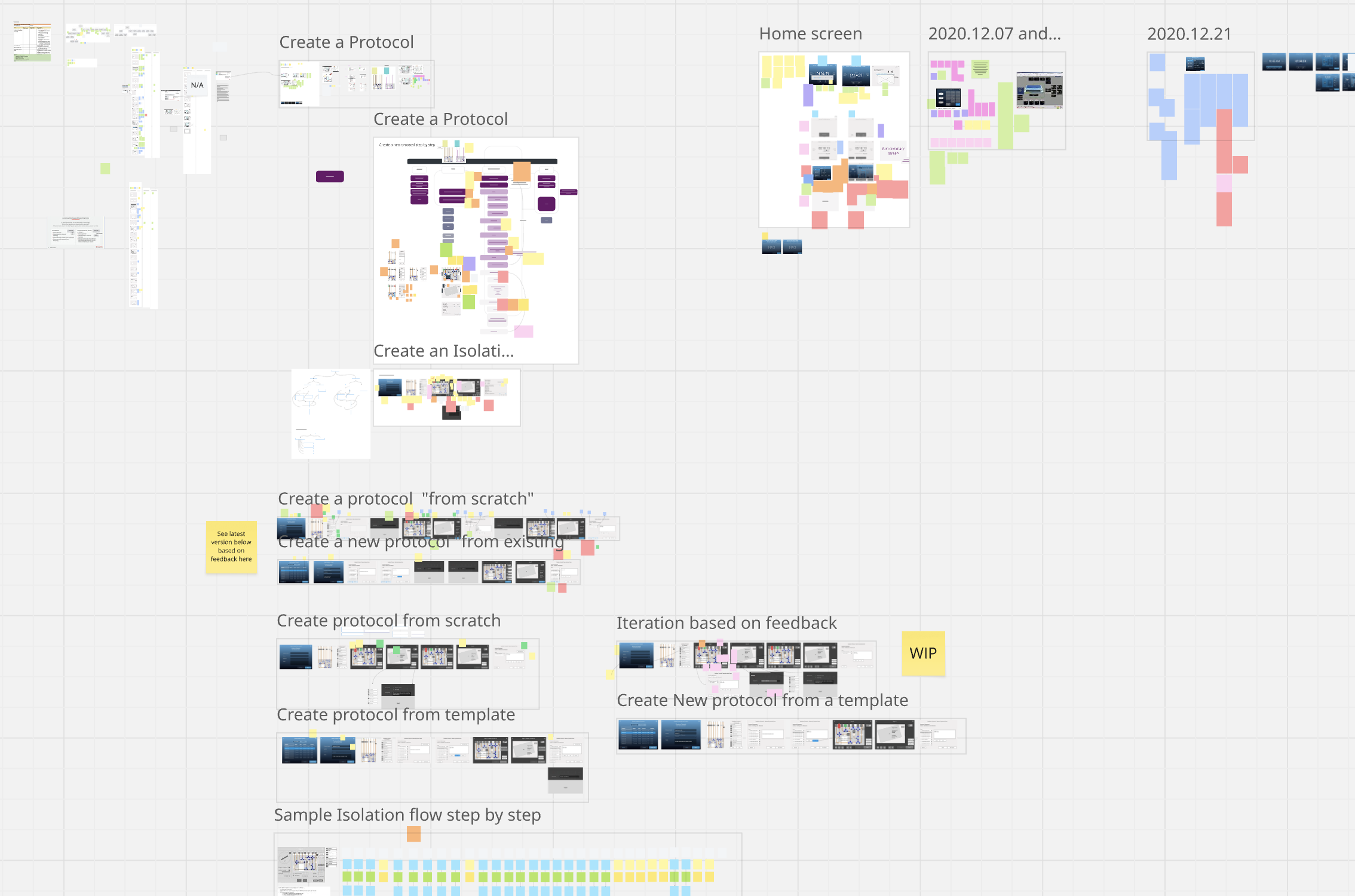
A glimpse of our working sessions in Miro
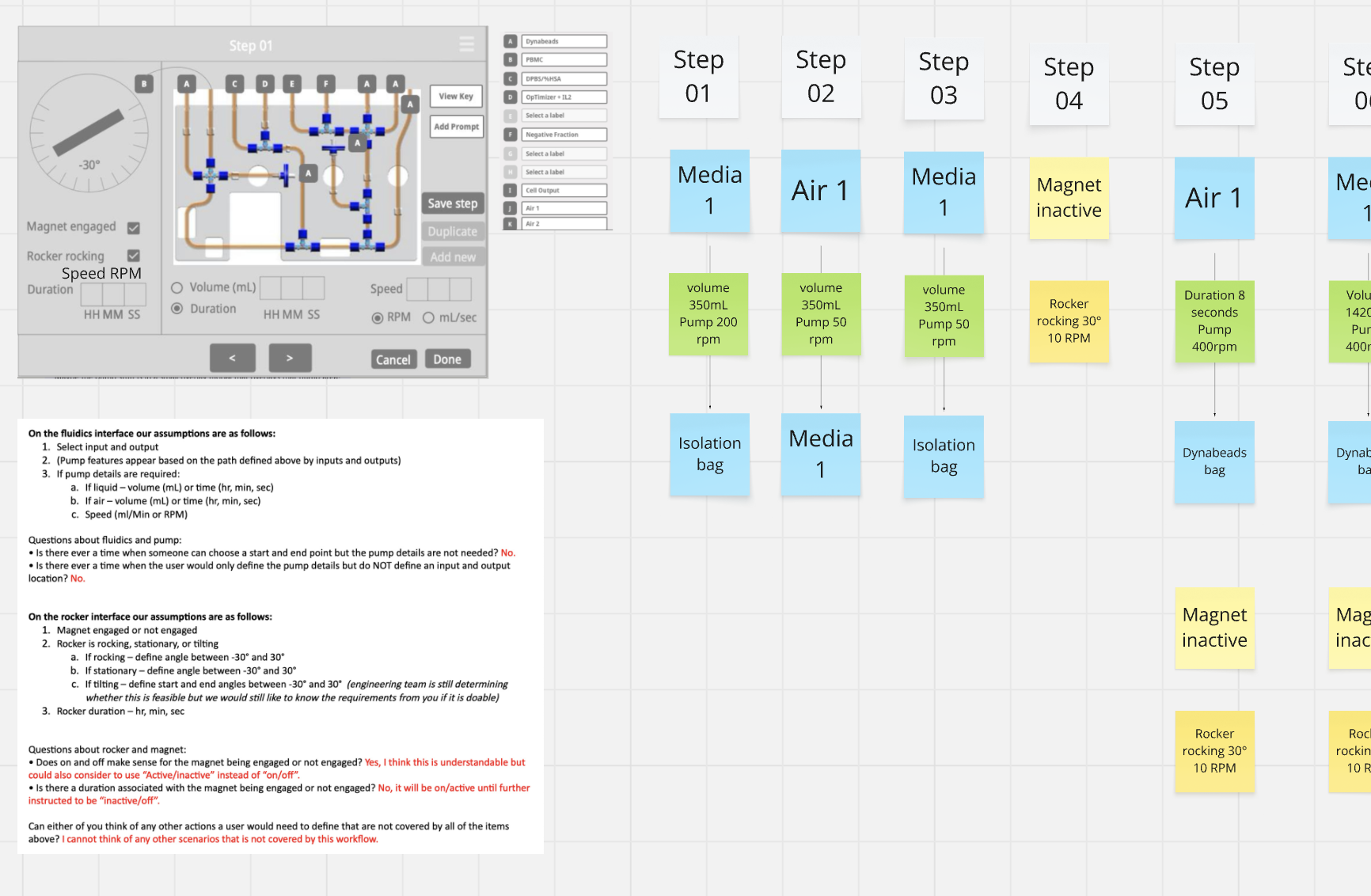
This snippet illustrates an early wireframe idea for how to make the primary interaction screen comprehensive enough to support all the steps a user might possibly add to a protocol.
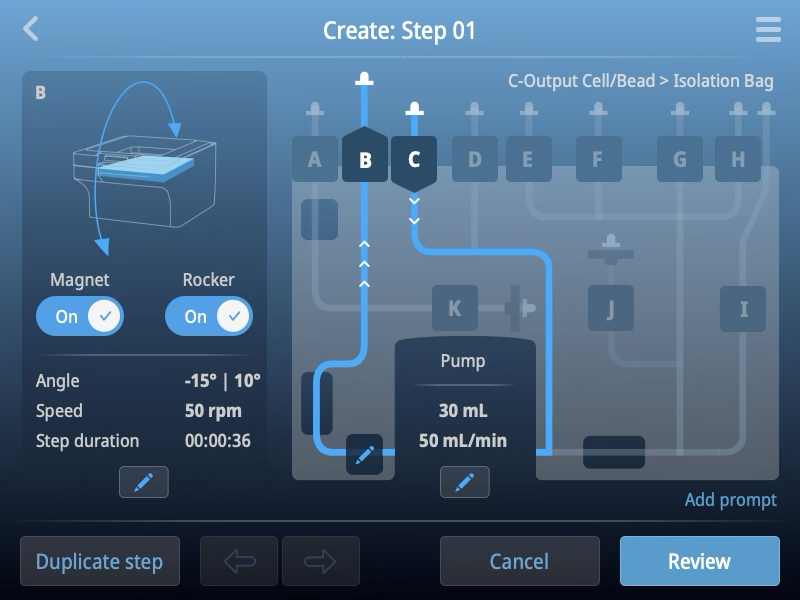
This is the primary interaction screen for the entire workflow. The illustration at right mirrors the fluidics path in the consumable on the front of the instrument. The user taps the input location and all possible output points remain active. They may then influence many other aspects of this step including a prompt for the user who will run the protocol.
Designed for a regulated manufacturing environment
To support use in a regulated manufacturing environment, I partnered closely with engineering and regulatory teams to enable OPC UA communication and ensure the system could support 21 CFR Part 11 compliance requirements.
Facilitated cross‑disciplinary planning
The pandemic appeared about a third of the way into this program! Just about the time our global planning intensive was supposed to take place in Singapore. I had recently begun using Miro and realized I could create a virtual space that simulated the usual activities we do in person. I transformed traditional on‑site planning into a shared Miro environment where teams could map tasks, dependencies, and timing together and trained product managers and team members how to use it effectively.
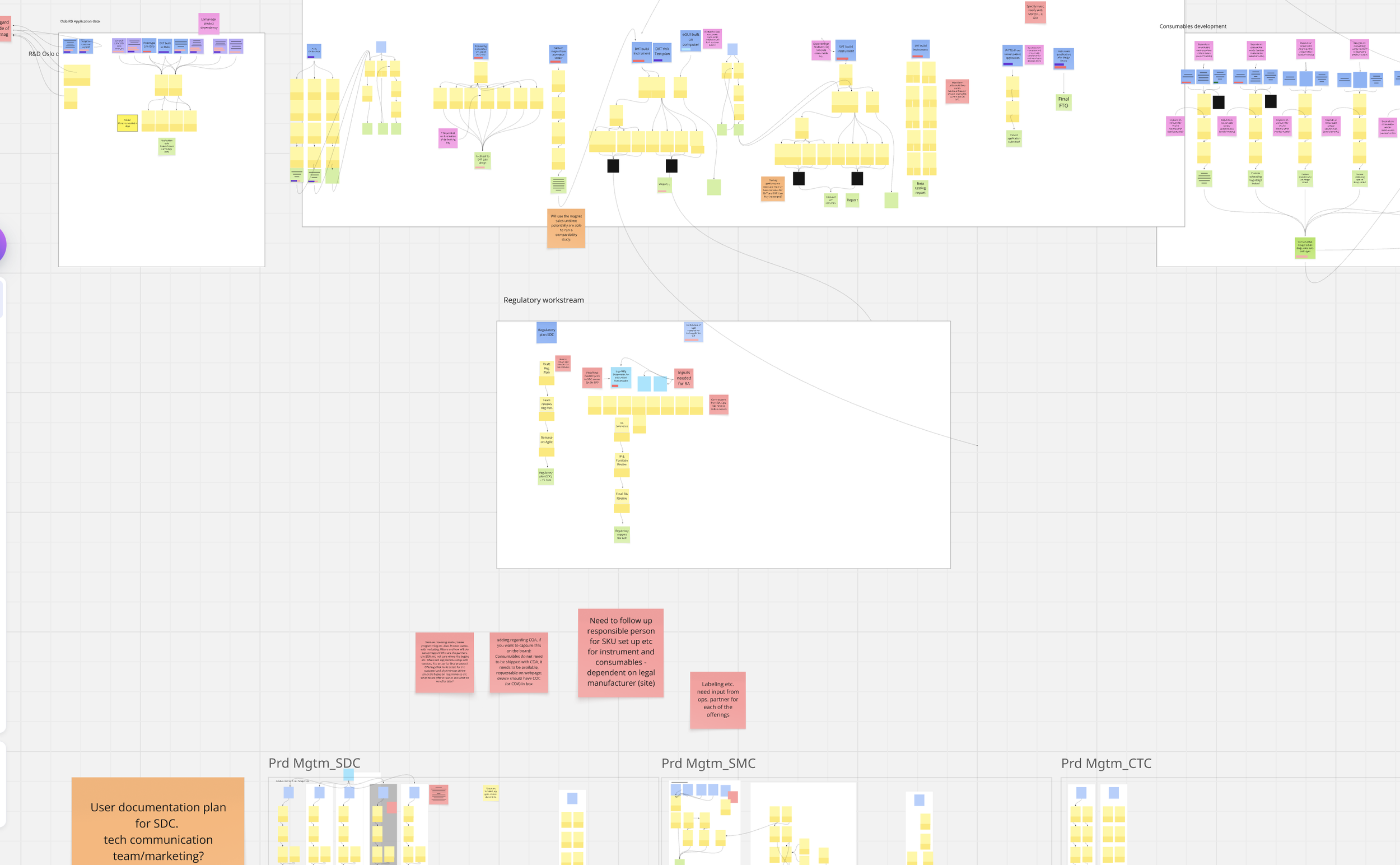
Intensive planning boards for each team showing tasks, timing, owners, inputs, outputs, dependencies etc.
All of this work led to meaningful improvements for both the people running the workflows and the patients receiving the therapies
How this helped scientists and operators
More consistent execution through standardized, guided workflows
Lower cognitive load with system‑driven timing, sequencing, and checks
Faster onboarding with a guided UI that shortened training from weeks to days
Stronger auditability through automated data capture and exportable logs
Greater scalability across roles and sites, supported by a companion desktop app
Broader role flexibility by empowering less‑experienced operators to run protocols that previously required experienced scientists
What this means for patients
More reliable therapies through reduced variability
Faster access to treatment because of fewer failed batches and higher throughput
Better therapeutic performance supported by consistent processing
Safer, more effective therapies enabled by higher (95%) cell purity
Expanded access to care with reduced training time and lower skill barriers
Industry Recognition and Patent
While the real focus is on scientist/operator ease of use and patient outcomes, the instrument’s significance was recognized and acknowledged across the industry.
In 2023, DynaCellect received:
R&D 100 Award (Analytical/Test)
Pharma Innovation Award (Cell & Gene Therapy)
BioTech Breakthrough Award
Clinical Immunology Solution of the Year
Our work also contributed to a patent for the DynaCellect system, recognizing the novel workflows and instrument innovations we helped bring to life.
Reflection
Driven by connection, communication, purpose, and opportunities to learn, mentor, and contribute in ways that matter, this was one of the most fulfilling programs I have ever been a part of.
It allowed me to use the full breadth of my capabilities, not only as a designer, but as a connector, facilitator, translator, and partner in deeply meaningful work. I made people feel seen and heard, created space for trust, built alignment across disciplines, and enabled important and impactful work.
This program required scientific fluency, constant collaboration, and the ability to bring clarity to complex workflows. Every decision was an important one as each one would impact operator ease and patient outcomes.
Designing the first digital workflow for a previously manual process reinforced how much I thrive where empathy, complexity, systems thinking, and teamwork come together. Even through some misaligned expectations and a global pandemic, we found creative ways to stay connected, be kind and respectful, and make positive progress towards a successful launch!
Thank you again for your interest! I look forward to learning more about the purposeful work you are doing and how I may bring value!
Please note: This is a case study for one of the dozens of biotech UX programs I have led. For most of these programs I was responsible for leading and facilitating the program’s UX, writing, UI / visual design, supporting research, and everything else that goes along with cross-disciplinary distributed teamwork for different business units across a global organization. Always stepping in and stepping up wherever I saw a need.